Construction Ops Automation: AI-Powered Project Estimation
Designed a construction cost estimator assistant that learns from company data. Estimators get explainable numbers (not guesses) from ML-powered insights blending company profitability reports, labor logs, and market factors.
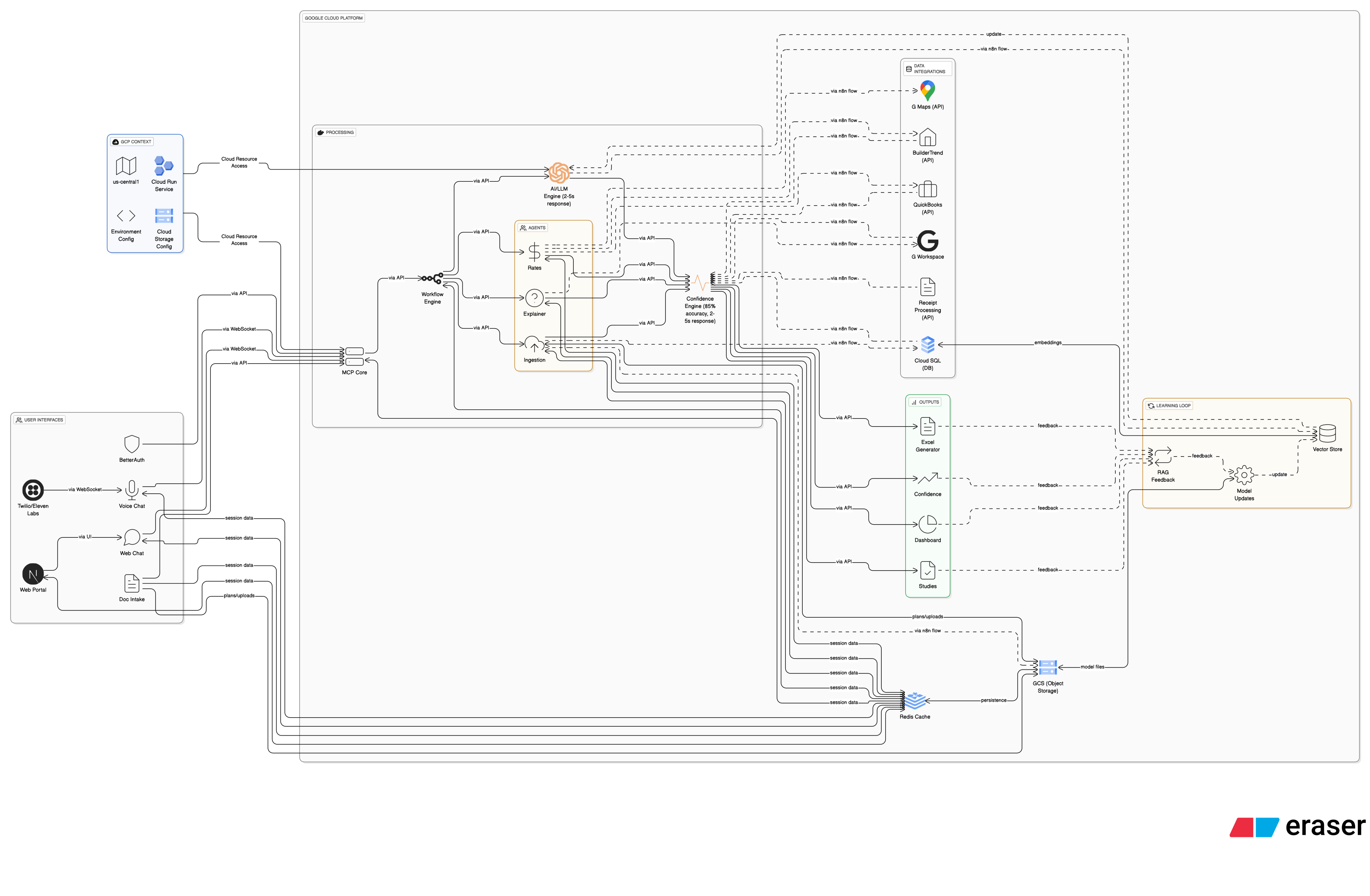
Context
Contractors were losing bids and margin because estimates weren't based on how their own crews actually perform. The knowledge lived in Buildertrend and spreadsheets—hard to pull together quickly and consistently.
Constraints
• No direct Buildertrend API access\n• Multiple data sources (time logs, daily logs, estimates, change orders, actuals)\n• Need for explainable AI decisions\n• California compliance requirements\n• Human-in-the-loop validation required
Approach
Instead of guessing, the system looks at past jobs to learn typical production rates and actual costs. It uses that history to suggest unit costs, then clearly explains why—so estimators can trust and adjust. Data sources include Buildertrend exports (time logs, daily logs, estimates, change orders, actuals), internal spreadsheets with client-specific markups, and market factors.
Outcome
• 10–25% lower variance between estimate and actual for repeatable tasks\n• Reduced assembly time from 3–4 hours to ~30–45 minutes for common scopes\n• Conservative ROI model: +2 additional wins per quarter at ~$75k margin each ≈ $600k/year upside\n• Built prototypes: data layout for history, upload/mapping specs, safety/guardrail prompts, template merge to Excel, and chat flow concept
Role & Stack
As Solutions Design lead, I scoped the technical architecture, designed the data pipeline, and created the user experience flow. Stack: Next.js (web) · Buildertrend (source) · Zapier (clock/exports) · Cloud Run (APIs/jobs) · Pub/Sub (events) · BigQuery (analytics) · dbt/Dataflow (transform) · Vertex AI (Gemini + embeddings/RAG) · Vertex Matching Engine or AlloyDB+pgvector (search) · Firestore (app config) · Cloud Storage (files/templates) · Secret Manager · Cloud Scheduler · Looker/Looker Studio (dashboards)
Next Steps
With proper Buildertrend API access: replace uploads with automatic, scheduled syncs, make every estimate line item clickable back to source records, and add lightweight forecasting that improves as more jobs complete. Focus on translating business needs into clear, ROI-driven plans with scalable architecture.